
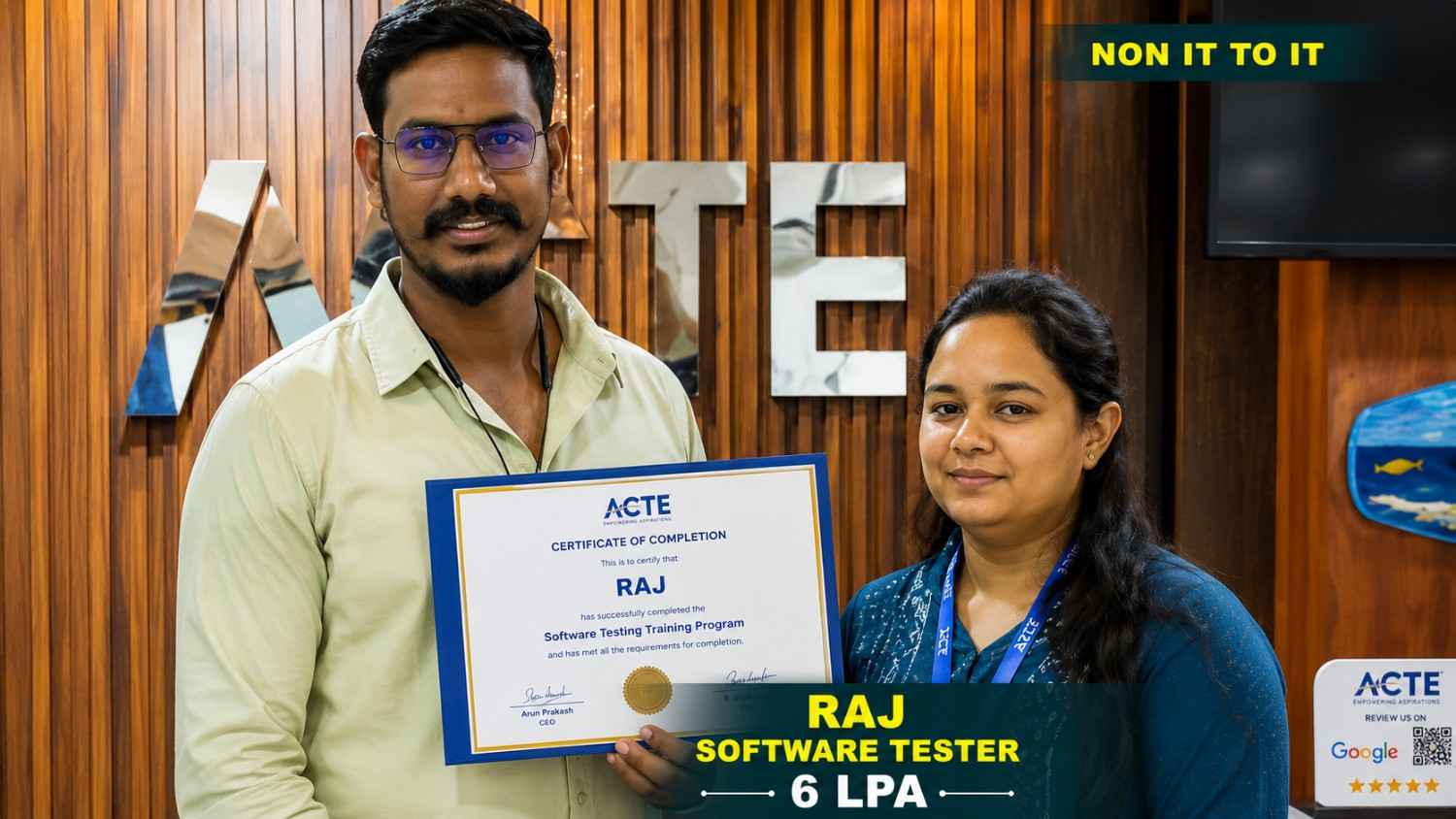
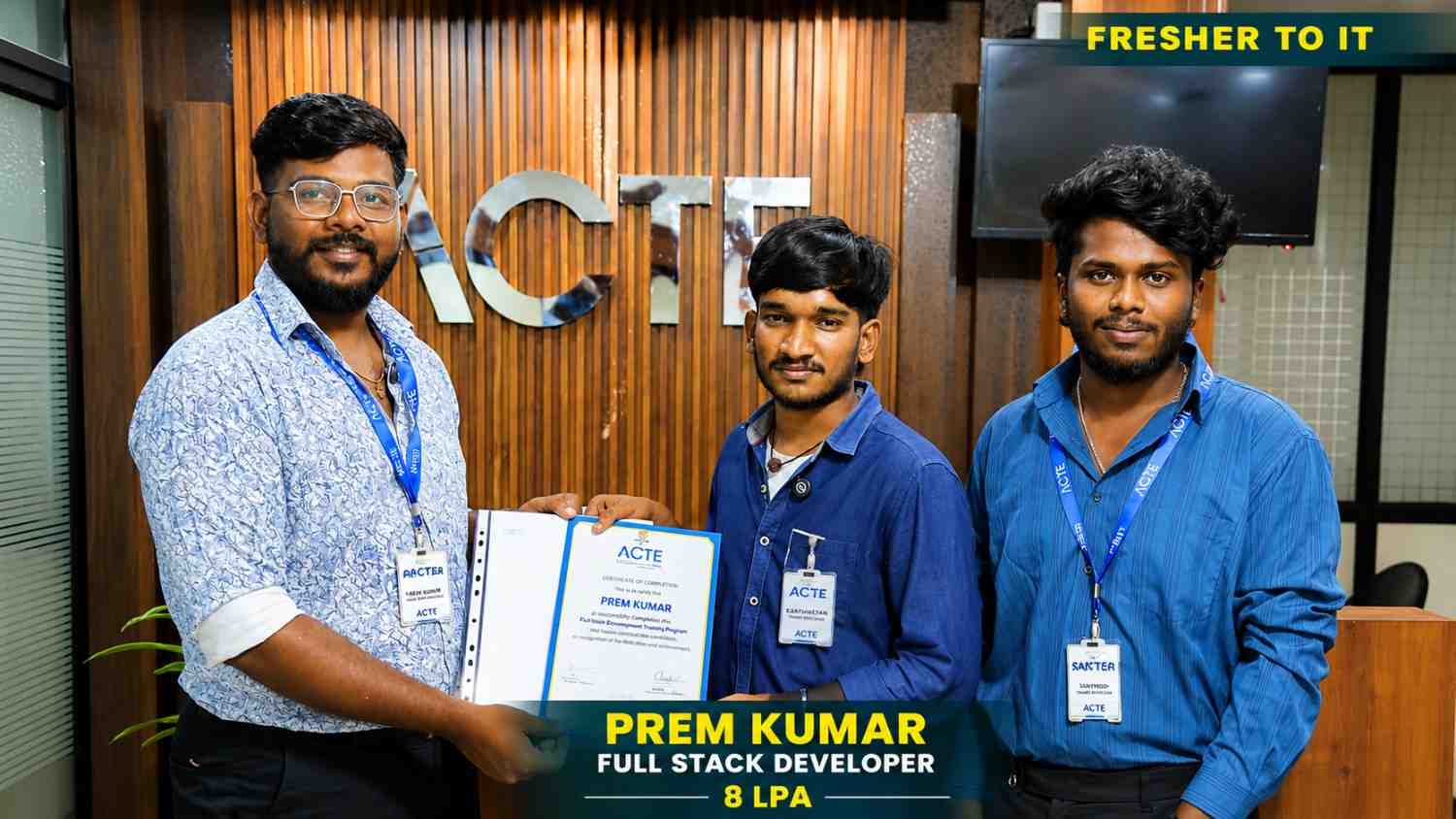
550+ Students Placed Every Month Be The Next!



























Our Hiring Partners

Curriculam Designed By Experts
Expertly designed curriculum for future-ready professionals.
Industry Oriented Curriculum
An exhaustive curriculum designed by our industry experts which will help you to get placed in your dream IT company
-
30+ Case Studies & Projects
-
9+ Engaging Projects
-
10+ Years Of Experience
- Circuit design workflow and documentation
- Biasing techniques for BJT & MOSFET
- Small signal and large signal analysis
- Power supply design and voltage regulation circuits
- Operational amplifier-based circuit design
- Number systems, logic laws, and Boolean expressions
- Logic gates, combinational & sequential circuits
- Flip-flops, counters, and shift registers
- Multiplexers, decoders, and arithmetic circuits
- Introduction to PCB layout preparation
- Schematic creation and symbol libraries
- Single-layer, double-layer & multi-layer PCB design
- Routing techniques for analog, digital & RF circuits
- Design for manufacturability & industry standards
- PCB fabrication process and material selection
- Introduction to microcontrollers and architecture basics
- GPIO interfacing techniques and peripheral control
- Sensor & actuator interfacing for automation systems
- Serial communication protocols (UART, SPI, I2C, CAN, USB)
- Working with Arduino / PIC / STM32 controllers
- Overview of power devices (SCR, MOSFET, IGBT, TRIAC)
- AC–DC / DC–DC / DC–AC converter circuits
- SMPS design and driver circuits
- Motor control circuits and speed controllers
- Testing and validation of hardware circuits
- Debugging techniques for board-level failures
- EMI/EMC considerations in electronic products
- Electrical safety standards & certifications
- Burn-in testing and reliability evaluation
- Introduction to IoT hardware architecture
- IoT sensors, modules & microcontroller platforms
- Wireless communication protocols (Wi-Fi, BLE, LoRa, Zigbee)
- Power optimization techniques for IoT systems
- PCB design considerations for IoT devices
- Gateway integration and cloud connectivity basics
- PCB design project from schematic to manufacturing
- Embedded automation prototype design
- IoT hardware development & sensor integration
- Power converter / inverter practical project
Electronic Design Training Projects
Become a Electronic Design Expert With Practical and Engaging Projects.
- Practice essential Tools
- Designed by Industry experts
- Get Real-world Experience
Designing Basic Electronic Circuits with Breadboards
Practicing resistor, capacitor, diode, and LED-based circuit wiring helps understand component behavior. Builds strong fundamentals in current flow, polarity, and basic testing using multimeters.
Creating Simple Sensor-Based Circuits
Working with temperature, light, or motion sensors develops interaction between input and output components. Enhances skills in signal interpretation and real-world hardware response.
Using Simulation Tools for Circuit Modeling
Designing and analyzing circuits using tools like Proteus, Multisim, or LTspice improves conceptual understanding without hardware risks. Helps predict performance before physical implementation.
Design & Testing of Power Supply Circuits
Building regulated power circuits using rectifiers, filters, and voltage regulators improves understanding of voltage stability. Useful for powering embedded boards and electronic systems safely.
Microcontroller-Based Automation System Development
Interfacing sensors, relays, and actuators with microcontrollers like Arduino or PIC enhances automation design capability. Supports real-time decision-making and control logic.
PCB Layout and Designing Using EDA Tools
Creating single-layer or double-layer PCB designs builds professional manufacturing-ready skills. Teaches routing, component placement, and grounding strategies for stable circuits.
High-Speed Circuit Design for Industrial Applications
Designing circuits with signal integrity considerations enables reliable high-frequency performance. Essential for telecommunications, industrial controllers, and IoT hardware systems.
Wireless Communication and IoT Hardware Integration
Developing circuits using Wi-Fi, BLE, or RF modules enhances device connectivity capability. Enables smart applications like remote monitoring and intelligent automation.
Embedded Hardware Testing & Debugging for Reliability
Using oscilloscopes, logic analyzers, and test jigs improves fault detection and performance optimization. Ensures safe, durable, and production-grade hardware development.
Career Support
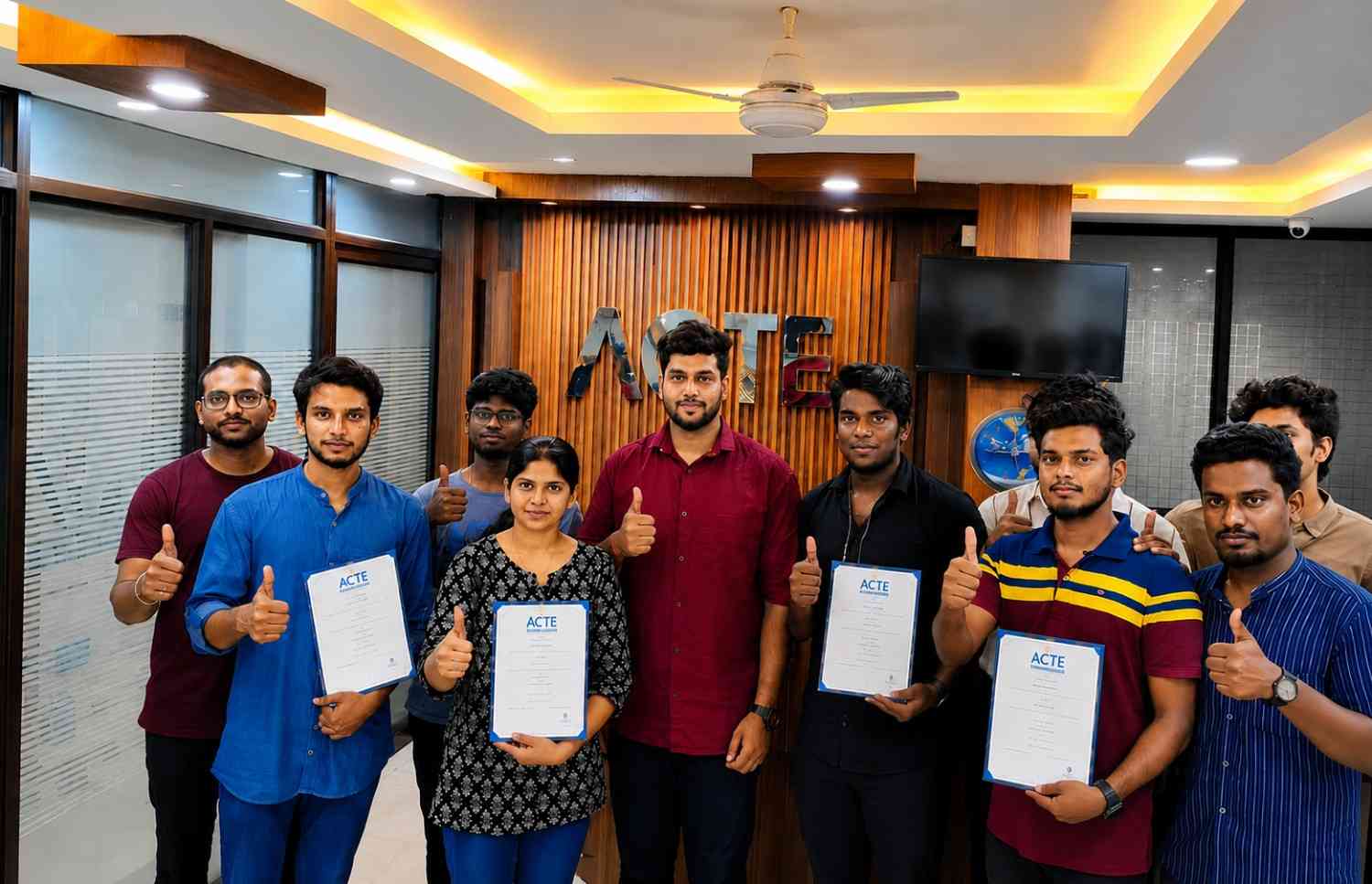

Placement Assistance

Exclusive access to ACTE Job portal

Mock Interview Preparation

1 on 1 Career Mentoring Sessions

Career Oriented Sessions

Resume & LinkedIn Profile Building
Key Features

Practical Training

Global Certifications

Flexible Timing

Trainer Support

Study Material

Placement Support

Mock Interviews

Resume Building
Upcoming Batches
What's included

 Free Aptitude and
Technical Skills Training
Free Aptitude and
Technical Skills Training
- Learn basic maths and logical thinking to solve problems easily.
- Understand simple coding and technical concepts step by step.
- Get ready for exams and interviews with regular practice.

 Hands-On Projects
- Work on real-time projects to apply what you learn.
- Build mini apps and tools daily to enhance your coding skills.
- Gain practical experience just like in real jobs.

 AI Powered Self
Interview Practice Portal
AI Powered Self
Interview Practice Portal
- Practice interview questions with instant AI feedback.
- Improve your answers by speaking and reviewing them.
- Build confidence with real-time mock interview sessions.

 Interview Preparation
For Freshers
Interview Preparation
For Freshers
- Practice company-based interview questions.
- Take online assessment tests to crack interviews
- Practice confidently with real-world interview and project-based questions.

 LMS Online Learning
Platform
LMS Online Learning
Platform
- Explore expert trainer videos and documents to boost your learning.
- Study anytime with on-demand videos and detailed documents.
- Quickly find topics with organized learning materials.
- Learning strategies that are appropriate and tailored to your company's requirements.
- Live projects guided by instructors are a characteristic of the virtual learning environment.
- The curriculum includes of full-day lectures, practical exercises, and case studies.

Electronic Design Training Overview
Benefits Gained from Enrolling in Electronic Design Course in Maraimalai Nagar
Learners gain confidence through practical modules in circuit design, PCB layout, and embedded systems. By enrolling in the Electronic Design Training in Maraimalai Nagar, students bridge academic learning with workplace expectations. Practical exercises and projects guarantee that knowledge translates into real‑world applications. The training also develops adaptability, creativity, and problem‑solving abilities. Learners are introduced to CAD tools, simulation software, and prototyping kits for enhanced productivity. By the end of the course, participants will have measurable progress and a portfolio of completed projects. This block highlights the transformation from beginner to capable electronic design professional.
Emerging Future Trends in Electronic Design
- AI‑Driven Circuit Optimization: Automate design workflows with intelligent algorithms. This training ensures readiness for enterprise projects.
- IoT Integration: Develop smart devices with embedded sensors and connectivity. Training equips learners with adaptability and analytical confidence.
- Flexible Electronics: Explore wearable and bendable circuit applications. The Electronic Design Placement in Maraimalai Nagar builds career confidence and technical assurance.
- Green Electronics: Focus on sustainable materials and energy‑efficient designs. Training empowers learners with risk management and organizational resilience.
- Cloud Collaboration: Share and co‑design projects across distributed teams. Training strengthens productivity, reporting expertise, and enterprise efficiency.
Latest Advancements in Electronic Design Certification in Maraimalai Nagar
Modern workplace trends are integrated into the curriculum, ensuring learners remain future‑ready. Students are introduced to advanced features such as 3D PCB modeling, high‑speed circuit simulation, and embedded AI modules. Essential skills such as compliance auditing, prototyping, and testing are emphasized alongside technical expertise. The program ensures learners remain competitive in rapidly evolving technology environments. By mastering these skills, students contribute meaningfully to productivity and innovation. Continuous learning is encouraged to stay aligned with future developments. Learners also gain exposure to integration with enterprise systems and global compliance frameworks. The Electronic Design Certification in Maraimalai Nagar validates technical assurance and compliance readiness.
Main Concepts Behind Electronic Design
- Circuit Theory: Understanding resistors, capacitors, and transistors. The Electronic Design Course in Maraimalai Nagar ensures readiness for enterprise projects.
- PCB Layout: Designing printed circuit boards for real‑world applications. Training equips learners with adaptability and analytical confidence.
- Embedded Systems: Programming microcontrollers for automation. The Electronic Design Certification Course builds technical assurance and compliance readiness.
- Simulation & Testing: Using CAD tools to validate designs. Training empowers learners with risk management and organizational resilience.
- Prototyping: Building and refining hardware models. Training strengthens productivity, reporting expertise, and enterprise efficiency.
Real‑Time Projects Completed in Placement
Learners benefit from the program by progressing into advanced career roles. Opportunities include electronics engineer, embedded systems developer, and hardware architect. In this context, Electronic Design Training in Maraimalai Nagar ensures career confidence and enterprise readiness. The program highlights advanced certifications to validate expertise. Networking and mentorship opportunities are emphasized to accelerate career development. By following these pathways, learners achieve sustained success and long‑term career stability. With the Electronic Design Placement in Maraimalai Nagar, participants evolve from mastering fundamentals to guiding teams and driving organizational efficiency. Learners also gain exposure to enterprise‑level projects such as IoT device prototypes, PCB manufacturing, and embedded automation systems. This block ensures learners are prepared for both career advancement and lifelong learning.
Career Opportunities After Electronic Design Training
Electronics Design Engineer
Responsible for designing, testing, and developing analog and digital hardware circuits. Works across manufacturing, automation, and industrial technology sectors.
Embedded Hardware Engineer
Builds microcontroller and IoT-based control systems for smart devices, handling board testing, communication modules, and sensor integration.
PCB Design Engineer
Designs optimized printed circuit boards for compact and high-performance hardware. Works with CAD/EDA tools used in electronics manufacturing.
R&D Engineer
Develops innovative hardware solutions and prototypes for commercial and industrial applications.
Testing & Validation Engineer
Ensures reliability through circuit testing, environmental testing, and debugging. Helps achieve certification and quality compliance for products.
Automation & Control System Engineer
Develops control panels and electronics for industrial machinery. Works in power plants, robotics, factory automation, and process industries.
Skill to Master
Analog & Digital Circuit Design
PCB Layout & Fabrication
Microcontroller Programming
Sensor & Actuator Integration
Power Management & Optimization
Signal Processing & Communication
Embedded System Co-Design
Hardware Debugging & Testing
Simulation & Verification Tools
IoT Device Integration
Problem-Solving & Analytical Thinking
Team Collaboration
Tools to Master
Altium Designer / Eagle
Proteus / Multisim
MATLAB / Simulink
Arduino IDE
Raspberry Pi / BeagleBone Boards
Oscilloscopes & Logic Analyzers
Signal Generators
IoT Modules (BLE, Zigbee, LoRa)
Power Analysis Tools
LTSpice / PSpice
Git / Version Control
CAD Software for Circuit Design
Learn from certified professionals who are currently working.

Training by
Arjun, having 12 years of industry experience
Specialized in: PCB design, embedded electronics, IoT circuits, and simulation tools
Note: Arjun guides students through hardware design, simulation, and testing projects. His practical approach ensures learners gain real-world exposure to electronics design, prototyping, and troubleshooting, preparing them for placements in IoT, industrial automation, and electronics companies.
Premium Training at Best Price
Affordable, Quality Training for Freshers to Launch IT Careers & Land Top Placements.
What Makes ACTE Training Different?
Feature
ACTE Technologies
Other Institutes
Affordable Fees
Competitive Pricing With Flexible Payment Options.
Higher Fees With Limited Payment Options.
Industry Experts
Well Experienced Trainer From a Relevant Field With Practical Training
Theoretical Class With Limited Practical
Updated Syllabus
Updated and Industry-relevant Course Curriculum With Hands-on Learning.
Outdated Curriculum With Limited Practical Training.
Hands-on projects
Real-world Projects With Live Case Studies and Collaboration With Companies.
Basic Projects With Limited Real-world Application.
Certification
Industry-recognized Certifications With Global Validity.
Basic Certifications With Limited Recognition.
Placement Support
Strong Placement Support With Tie-ups With Top Companies and Mock Interviews.
Basic Placement Support
Industry Partnerships
Strong Ties With Top Tech Companies for Internships and Placements
No Partnerships, Limited Opportunities
Batch Size
Small Batch Sizes for Personalized Attention.
Large Batch Sizes With Limited Individual Focus.
LMS Features
Lifetime Access Course video Materials in LMS, Online Interview Practice, upload resumes in Placement Portal.
No LMS Features or Perks.
Training Support
Dedicated Mentors, 24/7 Doubt Resolution, and Personalized Guidance.
Limited Mentor Support and No After-hours Assistance.
We are proud to have participated in more than 40,000 career transfers globally.

Electronic DesignCertification


- Provides expertise in electronic circuit design, PCB layout.
- Enhances skills in tools like Altium Designer, OrCAD, and design.
- Improves employability, IoT, consumer devices, and automation industries.
- Trains students in schematic design, simulation, testing, and debugging.
- Yes, multiple certifications are offered based on specialization.
- These validate practical skills in electronics and embedded system.
- Popular certifications include PCB Design Certification, Embedded Systems.
- Electronics Design Engineer
- Embedded Systems Engineer
- PCB Designer
- Hardware Engineer
- IoT Hardware Developer
- Testing & Validation Engineer
Yes, multiple certifications are recommended. Students can gain expertise in PCB design, circuit simulation, embedded systems, and IoT hardware. This increases career flexibility and industry recognition.
- IoT hardware development and embedded systems roles.
- Testing and validation positions for circuits and PCB designs.
- Consulting roles supporting electronics prototyping and design projects.
Yes, many institutes in Maraimalai Nagar offer local certification exams. Training includes online/offline sessions, hands-on project assessments, and placement-focused evaluations aligned with industry standards.
No prior experience is required. Hands-on labs, circuit design projects, PCB simulations, and embedded system exercises prepare learners for real-world electronics challenges.
- High demand for electronics design and embedded systems professionals in industries.
- Certification enhances career growth, employability, and project readiness.
- Real-time projects provide practical exposure to circuit design.
- Multiple roles can be accessed with one training program.
Frequently Asked Questions
- Institutes provide free demo sessions online or in-person.
- Trainers are certified electronics and embedded systems professionals with 5–12 years of experience.
- Yes, placement support includes resume preparation, mock interviews, technical guidance.
- Yes, certifications are widely recognized by electronics, IoT, and automation companies.
- Circuit simulation labs
- PCB design exercises
- Embedded system projects
- Hardware testing workshops
- Real-time electronics experiments to build practical skills.
