
550+ Students Placed Every Month Be The Next!



























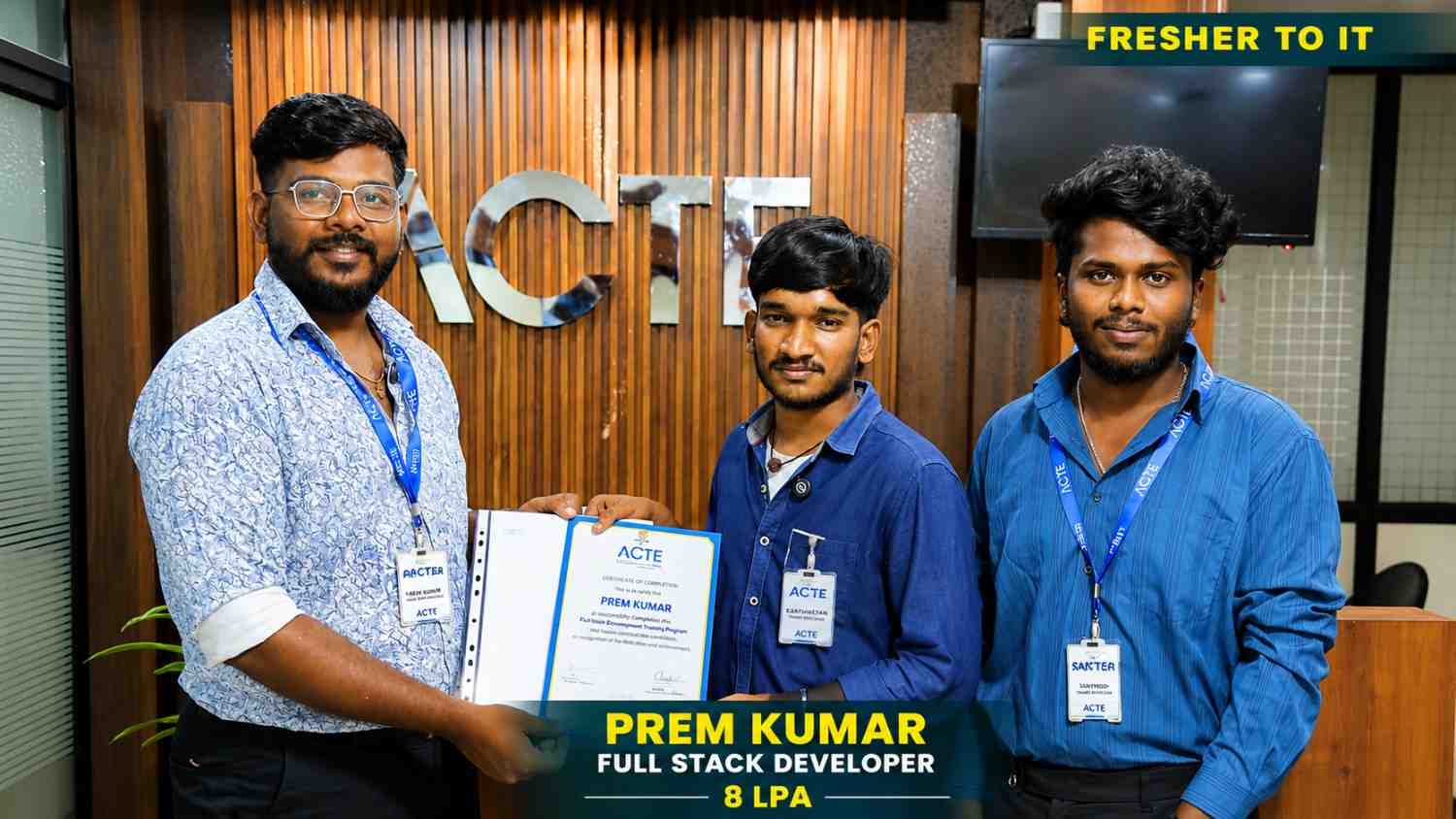

Our Hiring Partners

Curriculum Designed By Experts
Expertly designed curriculum for future-ready professionals.
Industry Oriented Curriculum
An exhaustive curriculum designed by our industry experts which will help you to get placed in your dream IT company
-
30+ Case Studies & Projects
-
9+ Engaging Projects
-
10+ Years Of Experience
AutoCad Training Projects
Become a AuroCad Expert With Practical and Engaging Projects.
- Practice essential Tools
- Designed by Industry experts
- Get Real-world Experience
Basic 2D Floor Plan
This project involves creating a simple 2D floor plan of a house, including walls, doors, and windows. It helps beginners understand basic drawing tools, layers, and scaling techniques in AutoCAD.
Mechanical Part Drafting
Students will create simple mechanical drawings like a nut, bolt, or simple gear system. This project focuses on dimensioning, annotations, and line commands.
Electrical Circuit Diagram
Designing a basic circuit layout using AutoCAD Electrical is a great way for learners to understand essential electrical design concepts. AutoCAD Electrical offers specialized tools
3D House Model
Transitioning from 2D to 3D in AutoCAD is a crucial step for students learning architectural and structural design. By designing a small house model, including rooms, staircases, and windows.
Industrial Machine
Creating a detailed mechanical component like a motor casing or bearing housing enhances skills in isometric drawing, hatching, and precision editing.
HVAC System Design
Designing an HVAC (Heating, Ventilation, and Air Conditioning) layout for a building helps students understand piping, ductwork, and ventilation schematics.
High-Rise Building Blueprint
Students design a multi-story commercial or residential building, including floor plans, sections, and elevations, using AutoCAD Architecture.
Complex Mechanical Assembly
Creating an exploded view of a mechanical system, like a gearbox or turbine, develops expertise in layer management, detailing, and tolerances.
Electrical Substation Layout
Designing a full substation diagram with transformers, switchgear, and control panels sharpens knowledge of AutoCAD Electrical tools and power distribution.
Career Support


Placement Assistance

Exclusive access to ACTE Job portal

Mock Interview Preparation

1 on 1 Career Mentoring Sessions

Career Oriented Sessions

Resume & LinkedIn Profile Building
Key Features

Practical Training

Global Certifications

Flexible Timing

Trainer Support

Study Material

Placement Support

Mock Interviews

Resume Building
Upcoming Batches
What's included

 Free Aptitude and
Technical Skills Training
Free Aptitude and
Technical Skills Training
- Learn basic maths and logical thinking to solve problems easily.
- Understand simple coding and technical concepts step by step.
- Get ready for exams and interviews with regular practice.

 Hands-On Projects
- Work on real-time projects to apply what you learn.
- Build mini apps and tools daily to enhance your coding skills.
- Gain practical experience just like in real jobs.

 AI Powered Self
Interview Practice Portal
AI Powered Self
Interview Practice Portal
- Practice interview questions with instant AI feedback.
- Improve your answers by speaking and reviewing them.
- Build confidence with real-time mock interview sessions.

 Interview Preparation
For Freshers
Interview Preparation
For Freshers
- Practice company-based interview questions.
- Take online assessment tests to crack interviews
- Practice confidently with real-world interview and project-based questions.

 LMS Online Learning
Platform
LMS Online Learning
Platform
- Explore expert trainer videos and documents to boost your learning.
- Study anytime with on-demand videos and detailed documents.
- Quickly find topics with organized learning materials.
- Learning strategies that are appropriate and tailored to your company's requirements.
- Live projects guided by instructors are a characteristic of the virtual learning environment.
- The curriculum includes of full-day lectures, practical exercises, and case studies.

AutoCad Training Overview
AutoCAD Training in OMR with Career Paths
AutoCAD Certification Course in OMR is an essential skill in the design and engineering sectors, presenting many career prospects. As an AutoCAD professional, you can investigate job opportunities in fields like architecture, mechanical design, civil engineering, electrical planning, interior design, and urban planning. Architects apply AutoCAD to produce intricate blueprints and structural designs, whereas mechanical engineers develop accurate technical drawings for machines and tools. Civil engineers employ AutoCAD for designing roads, bridges, and infrastructure layouts, and electrical engineers design wiring schemes, circuit diagrams, and power distribution plans. Moreover, interior designers and urban planners utilize AutoCAD to generate 3D representations of environments and city designs. Career options include positions such as CAD Technician, Architectural Designer, Civil CAD Drafter, Mechanical Design Engineer, Structural Engineer, and Electrical CAD Operator.
The Requirements for Learning AutoCAD Certification Course in OMR
- Basic Technical Skills :Fundamental knowledge of computers and operating systems Understanding of file management and software installation
- Engineering & Design Background:Basic concepts of engineering drawing and blueprint reading. Knowledge of geometry and mathematical measurements
- AutoCAD Software Access :A compatible computer system (Windows or macOS) with AutoCAD software installed Understanding of system requirements and software licensing
- Learning Resources & Practice:Access to tutorials, video lectures, and AutoCAD guides Regular hands-on practice with drafting, 3D modeling, and annotation tools
Enrolling in AutoCAD Development Course in OMR
AutoCAD Placement Training in OMR is among the most commonly utilized computer-aided design (CAD) software applications, rendering it a vital skill for individuals in engineering, architecture, and construction. Enrolling in an AutoCAD course provides you with the capability to produce detailed blueprints, 2D/3D models, and accurate technical drawings. This skill set is greatly appreciated across various sectors, creating pathways to lucrative employment opportunities. Additionally, AutoCAD training offers a well-organized learning framework, guaranteeing that students gain expertise in layer management, dimensioning, scaling, and rendering strategies. It also incorporates real-world projects, equipping students for practical use in the workforce. Securing an AutoCAD certification enhances the credibility of your profile, improving your resume and boosting your job prospects. Whether you aim to be an aspiring architect, mechanical engineer, or interior designer, proficiency in AutoCAD is an essential asset that facilitates career advancement and professional possibilities.
Techniques and Trends in AutoCAD Development Training in OMR
- 3D Modeling & BIM Integration: AutoCAD now includes enhanced 3D modeling features for architectural and mechanical designs Integration with Building Information Modeling (BIM) for collaborative infrastructure planning
- Cloud-Based CAD Solutions: AutoCAD Web and Mobile apps allow remote drafting and editing Cloud storage enables real-time collaboration and accessibility from multiple devices
- Artificial Intelligence (AI) in AutoCAD: AI-driven tools help automate repetitive design tasks Machine learning enhances error detection and design optimization
- Parametric and Generative Design: Use of AI-generated design alternatives based on input constraints Automated structural optimization for efficiency and sustainability
- Advanced Rendering & Visualization: Improved rendering engines for photo-realistic designs VR/AR integration for immersive architectural walkthroughs
The Most Recent AutoCAD Training in OMR with Tools
The AutoCAD Development Course in OMR is in a state of continuous development, integrating advanced tools to improve productivity. The newest versions feature AI-driven drawing automation, which aids in minimizing manual drafting mistakes. AutoCAD Web and Mobile applications empower designers to operate remotely, facilitating collaboration from any place. Newly introduced functionalities such as Dynamic Blocks and Smart Dimensioning simplify the process of annotating and measuring designs with accuracy. Furthermore, AutoCAD’s connection with cloud-based services like Autodesk Construction Cloud permits real-time sharing and editing. Sophisticated 3D rendering instruments and visualization methods offer comprehensive simulations of mechanical components and architectural designs. AutoCAD is also progressing towards environmentally conscious design by incorporating green building concepts and sustainable construction modeling. Regardless of whether working in mechanical engineering, civil engineering, or electrical design, the latest AutoCAD tools boost efficiency, precision, and innovation across all projects.
Career Opportunities After AutoCad Training
CAD Technician
A CAD Technician is responsible for creating technical drawings and schematics using AutoCAD. They work closely with engineers, architects, and project managers to develop precise 2D and 3D models for construction, manufacturing, and engineering projects.
Architectural Drafter
An Architectural Drafter specializes in creating blueprints and technical drawings for buildings, residential homes, commercial spaces, and urban structures. They use AutoCAD to develop floor plans, elevations, and section views, ensuring precision and compliance with building codes.
Mechanical Design Engineer
A Mechanical Design Engineer utilizes AutoCAD to create detailed engineering designs for mechanical components, tools, and machinery. They collaborate with manufacturing teams to develop prototypes, test product functionality, and ensure compliance with safety standards.
Civil CAD Designer
A Civil CAD Designer focuses on infrastructure projects such as roads, bridges, pipelines, and drainage systems. They use AutoCAD to draft topographical maps, site layouts, and grading plans.
Electrical CAD Operator
An Electrical CAD Operator is responsible for drafting electrical schematics, wiring diagrams, and circuit layouts for residential, commercial, and industrial projects. They use AutoCAD to design power.
Interior Designer
An Interior Designer (CAD Specialist) applies AutoCAD in designing interior layouts for homes, offices, and commercial spaces. They create detailed 2D floor plans and 3D renderings to present design.
Skill to Master
2D Drafting & Technical Drawing
3D Modeling & Visualization
Architectural Design & Layouts
Mechanical Drafting & Engineering Drawings
Civil Engineering & Infrastructure Design
Electrical & Plumbing Schematics
Layer Management & Annotations
Material & Texture Application
Precision & Measurement Tools
Collaboration & File Management
Industry-Specific CAD Applications
Automation & Customization
Tools to Master
Line Tool
Polyline Tool
Trim & Extend Tools
Offset Tool
Fillet & Chamfer Tools
Hatch & Gradient Tool
Dimensioning Tools
3D Modeling Tools
Blocks & Dynamic Blocks
Layers & Layer Management
Viewports & Layouts
AutoLISP & Macros
Learn from certified professionals who are currently working.

Training by
Ganesh, having 7 yrs of experience
Specialized in: AutoCAD Design, Drafting, 3D Modeling, Architectural Visualization, and Industrial CAD Applications.
Note: Ganesh is recognized for his expertise in CAD software solutions, precision drafting, and his ability to train students in industry-standard AutoCAD practices. His training helps professionals transition seamlessly from manual drafting to advanced digital design workflows.
Premium Training at Best Price
Affordable, Quality Training for Freshers to Launch IT Careers & Land Top Placements.
What Makes ACTE Training Different?
Feature
ACTE Technologies
Other Institutes
Affordable Fees
Competitive Pricing With Flexible Payment Options.
Higher Fees With Limited Payment Options.
Industry Experts
Well Experienced Trainer From a Relevant Field With Practical Training
Theoretical Class With Limited Practical
Updated Syllabus
Updated and Industry-relevant Course Curriculum With Hands-on Learning.
Outdated Curriculum With Limited Practical Training.
Hands-on projects
Real-world Projects With Live Case Studies and Collaboration With Companies.
Basic Projects With Limited Real-world Application.
Certification
Industry-recognized Certifications With Global Validity.
Basic Certifications With Limited Recognition.
Placement Support
Strong Placement Support With Tie-ups With Top Companies and Mock Interviews.
Basic Placement Support
Industry Partnerships
Strong Ties With Top Tech Companies for Internships and Placements
No Partnerships, Limited Opportunities
Batch Size
Small Batch Sizes for Personalized Attention.
Large Batch Sizes With Limited Individual Focus.
LMS Features
Lifetime Access Course video Materials in LMS, Online Interview Practice, upload resumes in Placement Portal.
No LMS Features or Perks.
Training Support
Dedicated Mentors, 24/7 Doubt Resolution, and Personalized Guidance.
Limited Mentor Support and No After-hours Assistance.
We are proud to have participated in more than 40,000 career transfers globally.

AutoCad Certification


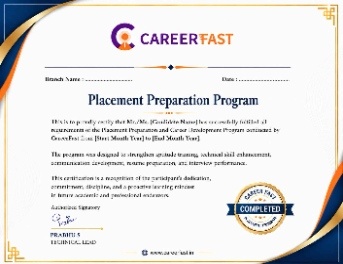
AutoCAD certification is designed for both beginners and experienced professionals. For entry-level certifications, prior industry experience is not required, as training programs cover all essential concepts.
AutoCAD is an industry-standard software used in architecture, engineering, construction, and manufacturing. Earning an AutoCAD certification validates your proficiency in design, drafting, and 3D modeling, increasing job opportunities and credibility. It enhances your skill set, making you a competitive candidate in the job market.
There are no strict prerequisites for entry-level AutoCAD certification. Beginners can enroll in training programs without prior knowledge of the software. However, for professional-level certification, familiarity with 2D and 3D drafting, engineering drawings, and design principles is recommended.
Earning an AutoCAD certification is highly beneficial for professionals in engineering, architecture, and design industries. It enhances career prospects, validates technical skills, and sets candidates apart from non-certified professionals.
Frequently Asked Questions
- Yes, ACTE provides a free demo session before enrollment.
- The demo session offers insights into the course structure, instructor expertise, and learning methodology.
- ACTE instructors are industry professionals with extensive experience in AutoCAD and CAD-related fields. They have worked on real-world projects in architecture, engineering, and design, bringing practical knowledge to the training sessions.
- Yes, ACTE offers placement assistance as part of its AutoCAD training program. The institute collaborates with multiple hiring partners, helping students connect with potential employers. Job interview coaching, resume-building workshops, and career guidance sessions are also provided to enhance employability.
- Upon successful completion, students receive an AutoCAD certification from ACTE.The certification validates your proficiency in 2D drafting, 3D modeling, and CAD tools.It enhances job opportunities in engineering, architecture, and interior design fields.
- Yes, students in the AutoCAD Placement Training in OMR work on live projects to gain practical exposure. The hands-on experience helps them understand real-world design challenges and apply theoretical concepts effectively. By working on industry-relevant assignments, students develop a strong portfolio, which is essential for job applications and career advancement.
